Thursday, July 18, 2013

Burrata and Grilled Peaches

This weather is borderline ridiculous! It was so hot today that the thought of preparing a large meal was really unappealing so instead I combined some of my favorite ingredients into a light no fuss dinner for my family. Burrata is a very versatile cheese. It is creamy, milky and cooling and plays well with all sorts of seasonal produce. Here I used organic peaches, my favorite prosciutto and the best condiments I could find.

Burrata

Burrata and Grilled Peaches (Serves 4)

Ingredients:
1 ball of burrata cheese
Extra virgin olive oil
Good quality balsamic vinegar
Maldon Sea Salt Flakes and freshly ground pepper
2 ripe local peaches or nectarines
Baguette
12 slices of La Quercia Prosciutto Americano

Cut the bread into thin slices, brush lightly with olive oil and toast until crisp and golden.
Divide Burrata into 4 pieces. Drizzle it with olive oil and season with salt and pepper.
Peel the peaches, cut them in half and remove the pits. Brush lightly with olive oil. Grill peaches under broiler or on grill for about 4 minutes until they begin to char and are cooked through.
To assemble the dish, on four small plates place a grilled peach half, a piece of the burrata and 3 of the prosciutto slices. Drizzle with balsamic, serve with the toasts and enjoy.


Thursday, May 16, 2013

Cheesemaking at Cato Corner Farm

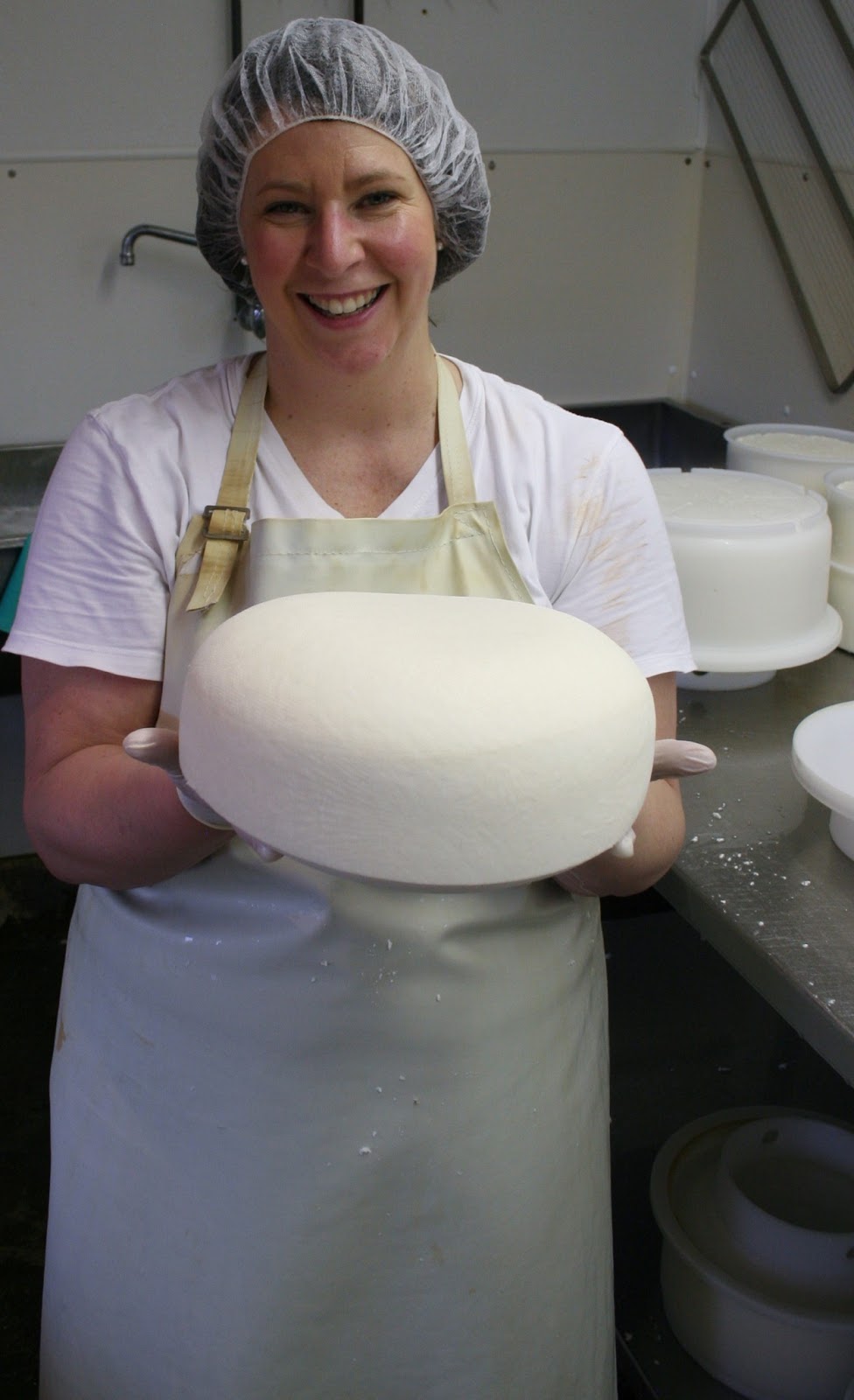
Last week I finally got to do something I have wanted to do since we opened the shop in 2009. I spent the day with one of my favorite cheesemakers, Mark Gillman of Cato Corner Farm making cheese. We have carried Mark's beautiful, delicious cheese since we opened our doors. He creates his cheese on his family farm in Colchester Connecticut from the milk of his small herd of Jersey cows. They milk just about forty five cows and turn the rich, pure raw milk into some of the country's best farmstead cheeses. When Mark extended the invitation I took advantage and cleared my schedule. Ever since I started on my new career in cheese I have done everything BUT actually make cheese. While studying for the Certified Cheese Professional Exam I focused a lot on the process and the factors that produce great cheese, I read as much as I could find to understand and fill in where I thought my knowledge was weak. My day with Mark brought it all to life and I could have saved myself a lot of reading had I visited sooner.

Mark suggested that I arrive on the farm after the morning milking and after the milk had been placed in the vat. That way I could avoid the waiting around while the cultures and rennet work their magic, turning the milk into curds and whey. I arrived around eleven o'clock and Mark warmly greeted me and said we were going to make Bridgid's Abbey today. We sell a lot of Bridgid's Abbey in the shop so I was excited. It is mild and milky with a pretty natural rind that begets a nutty, tangy flavor. We took a quick walk around the farm, poked our heads into the main barn and also watched as a few of the cows had their hooves trimmed. It was a cool Spring day and the grass and trees were bursting forth.
The cows had still not been turned out onto the pastures. Mark said they (the cows) were anxious to get out there but the grass wasn't quite ready. It needed some more time to grow and strengthen before the herd could have their first feast of the season. They were pretty much hanging around the barn and paddock munching on hay. Mark looked at his watch and we made our way to the cheese making room, located adjacent to the barn and behind their farm store.

We changed out of our farm clothes into clean clothes and put on long aprons, the obligatory hairnets and tall rubber boots. All this garb is necessary in cheesemaking to preserve a sterile, clean environment. The cheesemaking room is small and rustic and when I walked in the smell of fresh, sweet milk hung in the air. It was warm and pretty humid. We scrubbed in, sanitizing our hands and arms, scrubbing them with a brush then putting on two layers of gloves. We also washed the fronts of our aprons since we would be leaning over the vat. Mark gave me instructions to not touch anything except the vat. I followed orders carefully, fearful of messing up a whole batch of cheese! Mark checked the curd in the vat and determined it was time to cut it. We spent quite a bit of time cutting the curd until it was the perfect size. Then Mark rinsed it, which helps produce a sweeter, smoother cheese with less acidity. 


Next came the fun part. We scooped the curds into the molds and the the cheeses quickly began to take form as the curds quickly knitted together. We flipped the cheeses a few times and then they went into the press for about twenty minutes. We finished up by washing down and sanitizing all the equipement, vat and surfaces. Cheesemaking really is 85% cleaning. 


After we were done cleaning Mark took me on
a tour of his cheese caves. The room was amazing. Wall to wall cheese, aging gracefully on wooden shelves. The smell of ammonia was heavy in the air and we walked up and down the aisles inspecting the cheese. We tested an aging Bridgid's Abbey and it was sweet and creamy.


 After the tour Mark had some cheese that was ready to come out of the brining solution so I decided to finish my visit by checking out the barns and the cows on my own so he could finish up his day. I took some great pictures of "the girls" They are friendly, gentle animals and I couldn't help think about how lucky they were to live on such a beautiful farm and be so well taken care of. Unlike big commercial dairies these cows live quite the life and their health and happiness is paramount to the quality, flavor and nutrition of the milk they produce. I say it all the time, "happy animals make superior cheese."  


Monday, December 31, 2012

Ringing in 2013: Four Cheeses to Pair with Sparkling Wines


Ringing in 2013: Four Cheeses to Pair with Sparkling Wine

Whether it's Prosecco from Italy, Cava from Spain, Champagne from France or sparkling wine from the US, bubbly wines are the perfect match for an array of cheeses. What better way to ring in 2013 than with a cheese plate designed to complement the festive nature of sparkling wine?

MT. Tam is a luxurious triple crème cow’s milk cheese from. Triple Crème cheeses are rich and buttery with a fluffy texture and fairly mild flavor. They have a high butterfat content, which is balanced out by the refreshing bubbles in sparkling wine. Other triple crèmes to try to include Brillat Savarin or Kunik.
Pleasant Ridge Reserve is an Alpine-style cheese made from raw cow’s milk in Wisconsin. Pleasant Ridge has a nutty, clean flavor and a milky finish that shows off the extremely high quality of the cow's milk. Its rich, dense, and balanced flavors pair nicely with sparkling wine such as a Blanc de Noir, which elevates its sweetness and nutty quality. 


Garrotxa is a goat's milk cheese produced in the Catalonia region in northern Spain. The flavor is milky and delicate with a hint of nuttiness and a clean, smooth finish. It pairs with just about any sparkling wine but I suggest Cava.
Gorgonzola Cremificato is a dolce (sweet) style Gorgonzola from the Lombardy region of Italy. It is made from raw, cow’s milk and has a mild blue flavor with notes of grass. It pairs beautifully with a sweeter sparkling wine such as demi-sec champagne and makes a perfect dessert cheese.

Monday, February 27, 2012

Warming Up Winter with Fondue

Who isn’t a fan of fondue? On a cold winter night there are few things more comforting than melted cheese, especially when friends and family are gathered around to share in the experience. Originally a peasant food, fondue sprung up as a way to feed families at the end of a long winter. Farmers would use whatever was on hand, usually cheese, bread and wine, to feed their families and make it until Spring. The word “fondue” comes from the French word “fondre” which means to melt and its origin is the Jura Mountain range between France and Switzerland.  As Switzerland industrialized, cheese producers encouraged the dishes popularity and different parts of Switzerland adapted local cheeses and wines to suit local tastes. The dish was hugely popular in the United States through the late 1960’s and early 1970’s. I have vivid memories of being sent upstairs while my parents hosted fondue parties. So why is fondue so fashionable again? I think it has to do with ease of preparation and the availability of truly great cheese. It takes minimal effort and in less than an hour you have a great dinner party. Including the kids is up to you…


Serves 4 as a main course

Fairfield Cheese Company Classic Fondue

½ lb shredded Emmentaler
½ lb shredded Beeler Gruyère
1 clove fresh garlic
1½ cups dry white wine(we like Altesse, a wine from the Savoy region of France, available at Harry’s Wine & Liquor)
1 tbsp lemon juice
1 tbsp cornstarch
2-3 tbsp Kirsch
nutmeg and/or pepper to taste

Rub ceramic or earthenware fondue pot with cut garlic. Add wine and lemon juice. Over a low to medium burner, slowly add shredded cheese by handfuls, stirring constantly with wooden spoon until cheese is smooth and melted. Bring fondue to a bubble briefly. Add seasoning, stirring until blended. Mix cornstarch and Kirsch together to form paste. Add to fondue and allow to boil for another 30 seconds. If mixture is lumpy or thicker than desired, add small amounts of wine and stir. If it is too thin add more cheese.

Serve and keep hot over burner. Dip bread, apples, broccoli, summer sausage, steamed potatoes

Fairfield Cheese Company’s Beer and Cheddar Fondue

1 ½ cups beer or dark ale
2 cloves garlic, minced
8 oz Cabot Clothbound Cheddar
8 oz Shelburne Farms 2 Year Cheddar
2 tablespoons of cornstarch
1 teaspoon whole grain mustard

In a fondue pot over medium heat, heat the beer with the garlic until bubbles appear. Toss the cheese lightly with cornstarch until evenly coated and add a handful at a time.Stirring each time until the cheese is completely melted. Stir in the mustard and keep warm over low heat.

Serve with bread cubes, apple slices, sausages and potatoes. Serve cornichons on the side

Sunday, October 2, 2011

Nothing Says Autumn Like Cheese & Apples:
A Cheese & Apple Pairing Guide


My favorite time of year is Fall. The temperature is cooler, the air is crisp, and of course, the trees here in the Northeast put forth a display of brilliance that is breathtaking. I love putting on a cozy sweater and enjoying the outdoors. The farmer's markets are still chock full of produce, and the seasonal selections inspire me to head back into the kitchen to take advantage. Winter squash and apples are piled high, and though they are available year-round, there is no substitute for a locally grown, in-season apple.
Apples also happen to be the perfect match for cheese. I know I'm stating the obvious when I say cheese goes with apples. The salty, earthy, and nutty characteristics in particular cheeses are just perfect next to the tart, sweet, and crisp fruit. Besides the traditional combination of cheddar and apples, there are other styles of cheese that work well with apples.  Hard cheeses such as aged Gouda, washed rind cheeses like Oma, mountain cheeses like Comté, and even blue cheeses make terrific matches. Below are a few of my favorite cheese and apple pairings. These are just suggestions, of course; with all the different varieties of apples in the market and the thousands of cheeses available, the possibilities are endless.


1. Nancy’s Camembert is a creamy, bloomy rind cheese from the Hudson Valley. It is meltingly smooth and buttery with the texture of a triple-crème and an earthy bite.
It would go well with a sweet or tart apple but I like it with an Empire apple.

2. Pecorino Tartufo has a great truffle flavor and it doesn't overwhelm the goodness of the cheese. Rather, the ingredients blend together superbly, making for a beautiful balance between earthy truffle and nutty, sweet, almost caramelized aged sheep's milk.
I like it paired with a sweet apple such as a Honey crisp or Jonagold. The resulting marriage is slightly reminiscent of a caramel apple.

3. Pleasant Ridge Reserve is a firm, raw cow’s milk cheese from Wisconsin. It has a nutty, fruity almost sweet flavor similar to a French Alpine cheese called Beaufort. It is a match made in heaven with a Macoun.

4. Grayson from Meadow Creek Dairy in Virginia is a shop favorite. Made from pasture raised, raw cow’s milk Grayson has the perfect blend of buttery, bacony flavor and barnyard aroma. It pairs beautifully with a sweet apple like a Red Delicious


Friday, July 22, 2011

Dog Days and Cheese

This week has been a far cry from the mounds of snow we endured all winter.  I promised myself back then I wouldn't complain about the heat and humidity so instead of complaining I've decided to embrace the heat, turn off the stove and really enjoy all the seasonal produce available in the many farmer's markets. Paired with some of my favorite summertime cheeses it is a quick and simple way to enjoy a light dinner during a heatwave.
Summer for most people means firing up the grill, and eating seasonal local produce, for me it means both of those with cheese. Most of us aren't used to thinking of cheese as a seasonal food, but summer is the time when specific cheeses are made or are at their peak. Dairy animals are grazing on green, nutrient-rich grasses and foliage, and their diet comes through in the richness, flavor, and freshness of the cheese.  Summer is the natural season for fresh goat's milk and sheep's milk cheeses, such as feta, chevre and ricotta. Goats and sheep stop producing milk in winter when they are bred and preparing to give birth, (some cheese makers freeze the curds collected in summer, which is why we see goat cheese in stores year-round) so the best time to enjoy these fresh cheeses is when they are made from fresh summer milk. It's like waiting for the first tomatoes of the season! They are OK in Winter but spectacular in Summer. There are a few other cheeses, while not seasonally made, that seem right for the hot weather.  Fresh mozzarella or burrata (like mozzarella but with a creamy loose center) are cold, refreshing and the perfect foil for tomatoes and freshly cut basil. Add a drizzle of extra virgin olive oil and a baguette and you have dinner without turning on the heat. 


Here is a list of my favorite Summer cheeses and what I like to do with them:


Feta- Good quality feta bears little resemblance to the stuff you find crumbled in containers at the supermarket.  Good imported Greek feta often is sold in blocks immersed in brine and  is tangy, slightly salty and both creamy and crumbly. 


Feta goes great on just about any salad that features classic summer ingredients such as tomatoes, cucumbers and red onions. Crumble feta over a summer fruit salad of cantaloupe, watermelon and blueberries.


Beltane Fresh Chevre- a locally made goat cheese that is smooth and creamy with a fresh lemony tang.

Spread it on flatbread studded with fruit or thin slices of baguette and serve with mixed olives. Use it to top a salad of arugula and roasted beets. Grill vegetables and crumble the fresh chevre over the top.


Narragansett Ricotta-this ricotta is made from whole cows’ milk and is lightly salted, moist, sweet and delicate on the tongue. The texture is slightly fluffy and sweet. 

 I like this for breakfast on top of fresh berries and drizzled with honey. Also try it as a first course on a piece of bread drizzled with olive oil and black pepper.


Burrata-Burrata means "buttered" in Italian which is appropriate because it is very rich. At first glance, burrata resembles a ball of mozzarella but when you cut it open the interior spills out, revealing soft, stringy curd and fresh cream. If you're a lover of mozzarella, ricotta, or really anything creamy, you should try it. 

My favorite way to eat burrata is with fresh tomatoes, drizzled with good olive oil and sprinkled with basil.  It is also great with a slice of grilled bread or even with fresh figs like in this recipe from Michael Chiarella: Figs & Burrata Cheese


Thursday, June 30, 2011

How To Build A Cheese Platter

You're having a party and want to put out a cheese platter. Where to start? Here's a quick guide to guarantee there's something for everyone and plenty to eat.

The key to a great cheese platter is to focus on serving a variety of textures, flavors and accompaniments. In general we count on about 1 ounce per person, per cheese, assuming a selection of 3-5 cheeses. I rarely serve more than 5 cheeses because it becomes overwhelming to the palate. Always serve cheese at room temperature so remove them from the refrigerator at least an hour before serving.

I usually begin with a light, lemony goat cheese, such as Coupole from Vermont Creamery, or a La Tur which is a mixed milk cheese from Italy made from cow, goat and sheep's milk. Next I would pick a rich cow's milk triple cream cheese like Brillat Savarin from France or a Champlain Triple from Champlain Creamery in Vermont. Then on to a firm, sheep’s-milk cheese, such as Manchego or Pecorino Tartufo, studded with black truffles. These types are always crowd pleasers.

An Alpine-style, should come next. I like Comte or the American counterpart,Ascutney Mountain, which has an onion-like flavor. A more adventurous selection would be the brine-washed Eden from Sprout Creek Farm in upstate New York. It has a slight pungency but a pleasing creamy texture. The final cheese should be a blue cheese. Choose a classic blue like Stilton, but also consider an American cheese like Bayley Hazen Blue. Made by Jasper Hill Farm in Vermont, it has a nice buttermilk flavor and a hint of Vermont minerality in the finish.

To accompany a wide range of cheeses, fresh fruit is a natural. Grapes are a classic but also consider sliced apples or pears. Fresh figs, when in season, add something special. Preserves or chutney also work well. The sweetness from the preserves complement the saltiness of cheese. Nuts, such as caramelized walnuts, are a good accompaniment because they add an additional texture to the platter. Stay away from salted nuts because they tend to make everything seem too salty.

Finally, the big question, bread or crackers? I say, why not both? A great baguette provides a nice neutral canvas for the cheese and also a nice chewy texture. Breads studded with fruit and nuts complement tangy cheeses like goat and blue. When it comes to crackers I like to offer something plain like an olive oil cracker, as well as something with a little sweetness like Daelia's Biscuits for Cheese. This ensures there is something for everyone.